Chris Paris
May 28, 2026
 |
 |
Trivia Question❓Which Oak Ridge facility is known for its historic role in uranium enrichment during the Manhattan Project? Answer at the bottom of the newsletter |
 |
Knoxville Approves $499M Budget With No Property Tax Rate Increase |
Knoxville City Council has approved Mayor Indya Kincannon’s $499 million budget for fiscal year 2026–27, setting the city’s spending plan for the year ahead without increasing the property tax rate.
For residents, the budget’s biggest themes are public safety, housing, infrastructure, and continued investment in community spaces.
A major share of the budget is directed toward police and fire services, with $102.1 million allocated for salaries and benefits for Knoxville Police Department and Knoxville Fire Department employees. City leaders have framed that investment as part of an ongoing effort to recruit, retain, and support first responders.
Housing is another major focus. The approved budget includes more than $8 million for affordable housing, along with more than $2 million aimed at homelessness prevention and housing instability support. Those funds are expected to support programs and partnerships intended to help residents stay housed and expand access to attainable housing options across the city.
The budget also includes $2 million for capital improvements at Chilhowee Park, one of East Knoxville’s most recognizable public venues. The investment could support future events, facility upgrades, and broader use of the park as a community asset.
For Knoxville taxpayers, one of the clearest takeaways is that the city plans to fund these priorities without raising the property tax rate. That does not necessarily mean every property owner’s tax bill will remain the same, since individual bills can be affected by assessed property values, but the city’s tax rate itself is not increasing under the approved budget.
The spending plan will guide city operations and investments through the 2026–27 fiscal year, shaping everything from public safety staffing to housing programs, parks, infrastructure, and neighborhood services. The approved budget gives Knoxville residents a clearer picture of where city leaders are placing their priorities: holding the tax rate steady, investing in police and fire staffing, expanding housing support, and funding public spaces such as Chilhowee Park. For neighborhoods across the city, the practical impact will depend on how those dollars are distributed and implemented over the coming year. |

National Hamburger Day Spotlight: Sam & Andy’s Famous Volburger
A Knoxville-area classic worth celebrating on National Hamburger Day: Sam & Andy’s Deli carries on a family tradition of good food, familiar faces, and local flavor — with the Famous Volburger still standing as a hometown favorite. 🍔
|
|
South Waterfront Redevelopment Moves Into Developer Search Stage |
A major South Knoxville redevelopment opportunity has officially moved forward.
Knoxville’s Community Development Corporation, working with the City of Knoxville, has opened a Request for Qualifications process to find a development team for roughly 15 acres along the South Knoxville waterfront. The site is considered one of Knoxville’s most significant remaining riverfront redevelopment opportunities.
The property sits directly across the Tennessee River from the University of Tennessee campus and includes about 1,400 linear feet of riverfront across six parcels, including addresses on West Blount Avenue and Scottish Pike.
KCDC says it is looking for a qualified master developer with experience in urban, mixed-use waterfront projects. The vision includes a phased district with residential space, commercial activity, public areas, riverfront access, and ground-floor opportunities that could eventually support restaurants, retail, or other neighborhood-serving uses.
For South Knoxville residents, this is still an early step — not a final site plan. The RFQ process is designed to identify capable development teams before more detailed proposals move forward. WBIR reports that responses are due Aug. 7, with top-ranked developers expected to advance to the next stage.
The project builds on a long-running South Waterfront vision that dates back to the city’s 2005 plan for revitalizing and preserving roughly 750 acres along three miles of Tennessee River frontage south of downtown and across from UT.
The project could become one of Knoxville’s most closely watched redevelopment stories, especially for South Knoxville residents, UT-area commuters, downtown visitors, and anyone interested in better riverfront access. If it moves ahead, the site could influence future housing, public green space, walkability, restaurants, retail, and connections between South Knoxville, the Tennessee River, downtown, and the university area.
For now, the city and KCDC have moved from vision-setting into the formal search for a development partner. The next major milestone will be seeing which teams respond and what kinds of proposals advance later this year. |
 |
National Hamburger Day 2026 Gives Knoxville Burger Fans a Reason to Grab a Deal |
Thursday, May 28, is National Hamburger Day, and several burger chains are marking the occasion with limited-time deals, app offers, and freebies.
For Knoxville-area readers, the best approach is to treat the day as a simple excuse to grab lunch or dinner — but check the restaurant app before heading out. Many national offers require a rewards account, a minimum purchase, a promo code, or a participating location.
One Knoxville-specific option this year is Whataburger, which is still new to the local burger scene. The Texas-based chain now lists Knoxville locations on Cumberland Avenue and in Turkey Creek, giving local fans a nearby way to take part in the burger-day buzz.
Other national chains may also offer National Hamburger Day promotions, but availability can vary by market. Readers should confirm each deal in the company’s app or website before making a special trip.
Of course, National Hamburger Day does not have to be limited to chains. It is also a good excuse to support a favorite local burger spot, whether that means a neighborhood diner, a downtown restaurant, or a drive-thru standby.
Quick reader noteBefore you go, check the fine print: some deals are app-only, rewards-only, one-day-only, or limited to participating locations. |
 |
Interesting Facts |
Before Dave Thomas became the founder of Wendy’s, his restaurant career had an early Knoxville connection. As a young boy, he worked at Regas Restaurant, the longtime downtown Knoxville dining landmark — a fitting bit of local trivia for National Hamburger Day.
Wendy’s own company history notes that Thomas worked at Regas around 1944, and the Horatio Alger Association describes the job as the beginning of his restaurant career |
 |
How Oak Ridge Became America’s “Secret City” |
Before Oak Ridge became known for science, national security, and research, it was a quiet stretch of East Tennessee farmland. That changed quickly during World War II.
In 1942, the federal government selected land west of Knoxville as one of the main sites for the Manhattan Project, the secret wartime effort to develop the world’s first atomic weapons. The area’s ridges, valleys, available land, and relative isolation made it useful for a project that needed space, security, and secrecy. The U.S. Army Corps of Engineers acquired roughly 60,000 acres of rural land to build what became Oak Ridge.
The transformation was dramatic. What had been small communities and farms became a fenced, guarded city built for one purpose: enriching uranium for the atomic bomb project. Oak Ridge was home to several massive Manhattan Project facilities, including plants that operated around the clock during the war.
The new city grew far faster than originally planned. The National Park Service says Oak Ridge was initially designed for about 13,000 workers, but by 1945 its population had climbed to more than 75,000 workers and family members. That rapid growth helped give Oak Ridge its nickname: the “Secret City.”
Life there was unusual. Workers came from across the country, many not fully knowing what they were helping build. Security was tight, badges were required, and the work was divided so that many employees only understood their specific task. At the same time, Oak Ridge had to function like a real city, with housing, schools, stores, buses, churches, recreation, and everyday family life developing alongside top-secret industrial work.
Oak Ridge’s role became clearer after the war. Uranium enriched there was used in the “Little Boy” atomic bomb dropped on Hiroshima, placing the East Tennessee city at the center of one of the most consequential and difficult chapters of the 20th century.
Today, Oak Ridge still carries that history. The city remains closely tied to science, energy, and federal research, while the Manhattan Project National Historical Park helps preserve and explain its wartime legacy. The park’s Oak Ridge sites connect visitors to the places where thousands of workers helped shape a project that changed the course of history.
For East Tennessee, the story of Oak Ridge is more than a history-book footnote. It is a reminder that one of the world’s most secret and significant wartime efforts unfolded just a short drive from Knoxville, changing a rural landscape into a city almost overnight. |
 |
Four Weekend Alternatives Around Knoxville |
Quote Of The Day |
"Every moment is a fresh beginning." - T.S. Eliot |
 |
Outdoor Drinking Zones Approved Around Covenant Health Park |
Knoxville City Council has approved a new outdoor refreshment area around Covenant Health Park, creating designated spaces where visitors can carry alcoholic drinks purchased from participating businesses.
The new stadium-area DORA will cover four public plazas totaling 61,400 square feet near the city- and county-owned multi-use stadium between the Old City and East Knoxville. City officials say the district is tentatively expected to begin in mid-July.
Under the plan, participating businesses will use approved cups and identification requirements. Drinks will need to be purchased from approved vendors and carried only within the designated DORA boundaries.
For downtown and stadium visitors, the change could make game days, concerts, and other events around Covenant Health Park feel more connected to nearby restaurants, bars, and public gathering spaces. For businesses, it may bring more foot traffic between the Old City, the stadium, and surrounding plazas. |
The Melting Pot of Knoxville shut down May 26 after 31 years on North Central Street. |
The fondue restaurant became a familiar special-occasion stop for date nights, birthdays, anniversaries, and group dinners, helping anchor the Old City dining scene through decades of downtown change. The restaurant says it is seeking a transition to new ownership and hopes to serve the Knoxville community again in the future. |
𝐓𝐫𝐚𝐟𝐟𝐢𝐜 𝐡𝐞𝐚𝐝𝐬-𝐮𝐩 𝐟𝐨𝐫 𝐄𝐚𝐬𝐭, 𝐍𝐨𝐫𝐭𝐡 𝐊𝐧𝐨𝐱, 𝐚𝐧𝐝 𝐒𝐞𝐯𝐢𝐞𝐫 𝐂𝐨𝐮𝐧𝐭𝐲 𝐝𝐫𝐢𝐯𝐞𝐫𝐬 🚧 |
Drivers should keep an eye on 𝐄𝐦𝐨𝐫𝐲 𝐑𝐨𝐚𝐝 𝐰𝐨𝐫𝐤 𝐢𝐧 𝐍𝐨𝐫𝐭𝐡/𝐄𝐚𝐬𝐭 𝐊𝐧𝐨𝐱, where construction could affect travel times.
In Sevier County, travelers may also see daytime lane closures on 𝐒𝐑 449 𝐧𝐞𝐚𝐫 𝐃𝐨𝐥𝐥𝐲 𝐏𝐚𝐫𝐭𝐨𝐧 𝐏𝐚𝐫𝐤𝐰𝐚𝐲.
The takeaway: build in a little extra time, watch for crews, and check your route before heading out — especially if you’re traveling through those areas during the day. |
 |
Interesting Facts |
|
 |
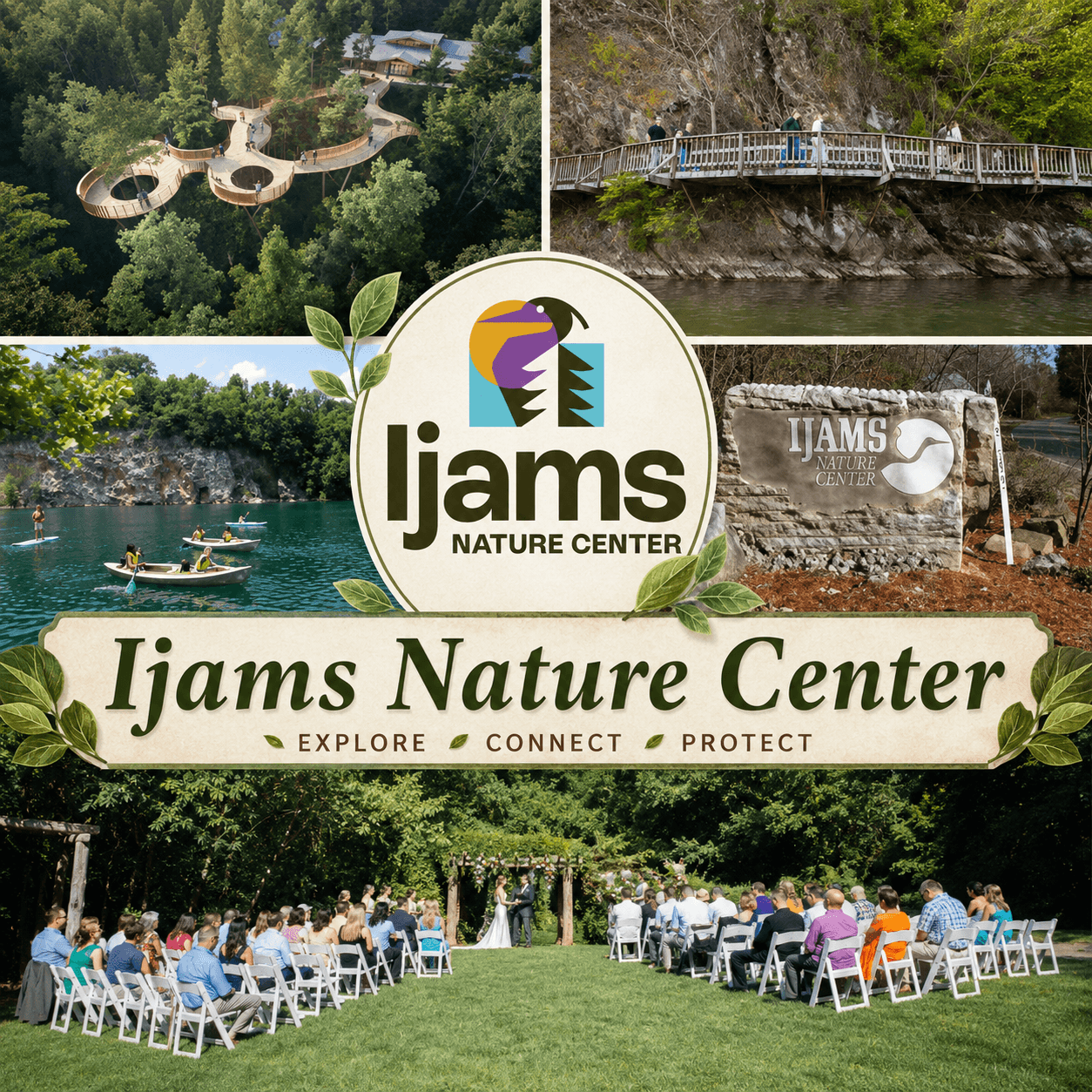 |
One Thing Local: Ijams Started as a Family Bird Sanctuary |
Before Ijams Nature Center became one of Knoxville’s best-known outdoor destinations, it began with a family’s love of birds, plants, and the natural world.
The roots of Ijams trace back to Harry “H.P.” Ijams and Alice Yoe Ijams, whose South Knoxville homesite became a gathering place for nature lovers more than a century ago. Harry, known as a leading local bird expert, created a bird sanctuary on the property, while Alice was closely associated with Knoxville’s garden community. The City of Knoxville notes that the area has drawn birders and nature lovers for more than 100 years.
Over time, that private family landscape grew into something much larger. Ijams’ own history says the family celebrated nature throughout their lives, with H.P. creating the bird sanctuary and Alice growing flowers on the homesite. The family also helped establish a local Girl Scouts organization in 1923 and donated part of their property for what became Camp Mary Ijams along the river.
Today, Ijams is no longer just a quiet sanctuary tucked into South Knoxville. It has become a major urban nature destination with trails, river access, education programs, wildlife habitat, and connections to Knoxville’s Urban Wilderness. Ijams describes itself as a nonprofit nature center focused on inspiring people to care for the Earth through education and outdoor experiences.
That evolution is what makes the story so interesting: one family’s backyard conservation effort helped shape a public place that generations of Knoxville residents now use for hiking, birding, paddling, classes, events, and simply getting outside.
For locals, Ijams is more than a park. It is a reminder that some of Knoxville’s most loved public spaces grew from personal stewardship, neighborhood history, and a long-running belief that nature should be close to home. |
Have a local event coming up? |
Send the details our way at tips@865daily.com |
 |
 |
💡 Answer to Trivia Question: Y-12 |