
Synchronous Fireflies in the Smokies: East Tennessee’s Most Magical Night Show |
Discover the enchanting dance of synchronous fireflies illuminating the Smoky Mountains, a captivating natural phenomenon unlike any other. |
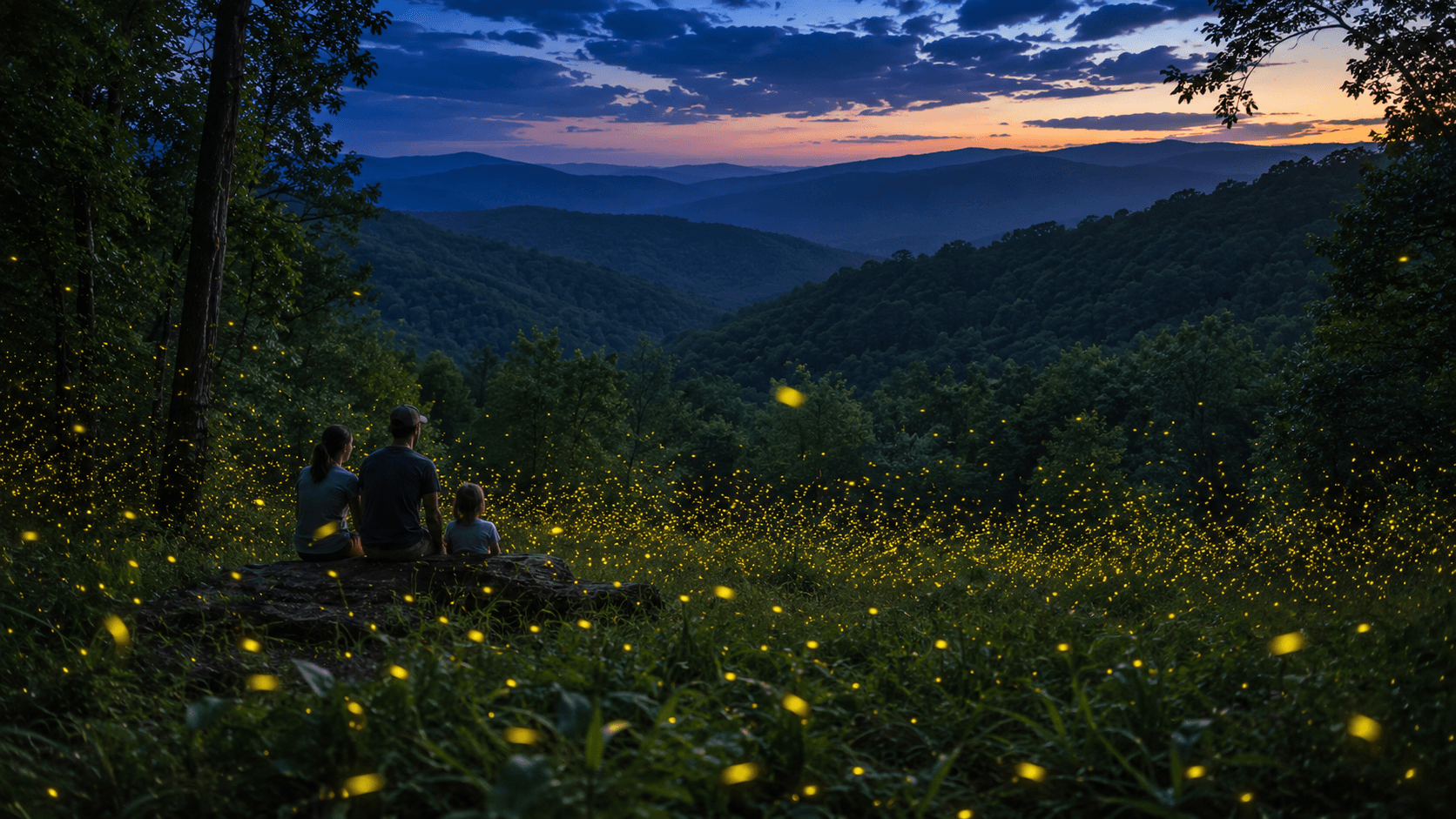
Every year, as spring gives way to summer in the Great Smoky Mountains, one of East Tennessee’s most magical natural events begins after dark.
In the Elkmont area of Great Smoky Mountains National Park, thousands of synchronous fireflies flash together in rhythmic patterns, creating a quiet, glowing show in the forest. The species, Photinus carolinus, is one of at least 19 firefly species found in the park and is known for its ability to synchronize its flashing pattern during mating season.
For people who grew up calling them lightning bugs, the display feels familiar and otherworldly at the same time. It is still a summer insect lighting up the woods — just on a scale and rhythm that feels almost choreographed.
Why the Smokies Are So Special for FirefliesThe Smokies are one of the best-known places in the country to see synchronous fireflies. The combination of moist forest habitat, protected land, and the right seasonal conditions helps create the environment these insects need.
The display typically happens over a short window in late spring or early summer, though exact timing can shift from year to year based on weather and temperature. That unpredictability is part of what makes the event feel so special. It cannot be scheduled like a concert or festival. It is nature’s calendar, and the park plans around the best available data each year.
For 2026, Great Smoky Mountains National Park hosted its annual managed viewing opportunity at Elkmont from May 20–27, with vehicle reservations distributed through a lottery system.
Why There’s a LotteryThe firefly display is beautiful, but it is also fragile.
Because demand is much higher than available parking and because the park needs to protect the habitat, Great Smoky Mountains National Park uses a lottery system for the official Elkmont viewing event. For 2026, the lottery opened April 24 and closed April 27, with selected applicants notified by May 6. Recreation.gov listed 960 total vehicle reservations, or 120 per day, for the eight-day managed period.
The system helps manage traffic, reduce crowding, and give visitors a better chance to experience the display without overwhelming the area. It also helps protect the fireflies themselves. Bright lights, heavy foot traffic, and unmanaged crowds can interfere with the viewing experience and the insects’ natural behavior. That is why the park asks visitors to follow viewing rules, limit light use, and respect closed areas.
What It’s Like to See ThemThe best part of the synchronous firefly experience is how quiet it is. Unlike a fireworks show, there is no countdown and no big finale. Visitors usually settle into the viewing area as the sky darkens. Then, slowly, small flashes begin in the trees. As darkness deepens, more lights appear. The flashes start to pulse in patterns, blinking across the forest floor and understory.
The effect is subtle at first, then unforgettable.
It is not just “a lot of fireflies.” It is a living light pattern — a reminder that the Smokies are full of natural wonders that are easy to miss during daylight.
How to Plan for a Future Firefly SeasonThe official Elkmont event has already passed for 2026, but this is a perfect plan-ahead story for readers who want to try next year.
The National Park Service typically announces event dates and lottery details in spring, once staff can estimate the display window. Interested visitors should watch the park’s official firefly page and Recreation.gov for updates. The lottery window is usually short, and demand is high.
A few planning reminders:
The Local TakeawayThe synchronous fireflies are one of the best reminders that East Tennessee’s outdoors are not only about big views and mountain summits.
Sometimes the most memorable Smokies experience happens after dark, close to the ground, in a quiet forest full of tiny lights.
For locals, it is worth keeping on the annual calendar — not just as a bucket-list event, but as a reason to pay closer attention to the natural rhythms of the region we live in. |
0 Comments
Join the conversation
Be the first to comment
Share your thoughts above.