

The Great Fall Migration: Butterflies and Birds Passing Through East Tennessee |
Monarchs, songbirds and hawks rely on the region's fields, forests and mountain ridges during their autumn journeys |
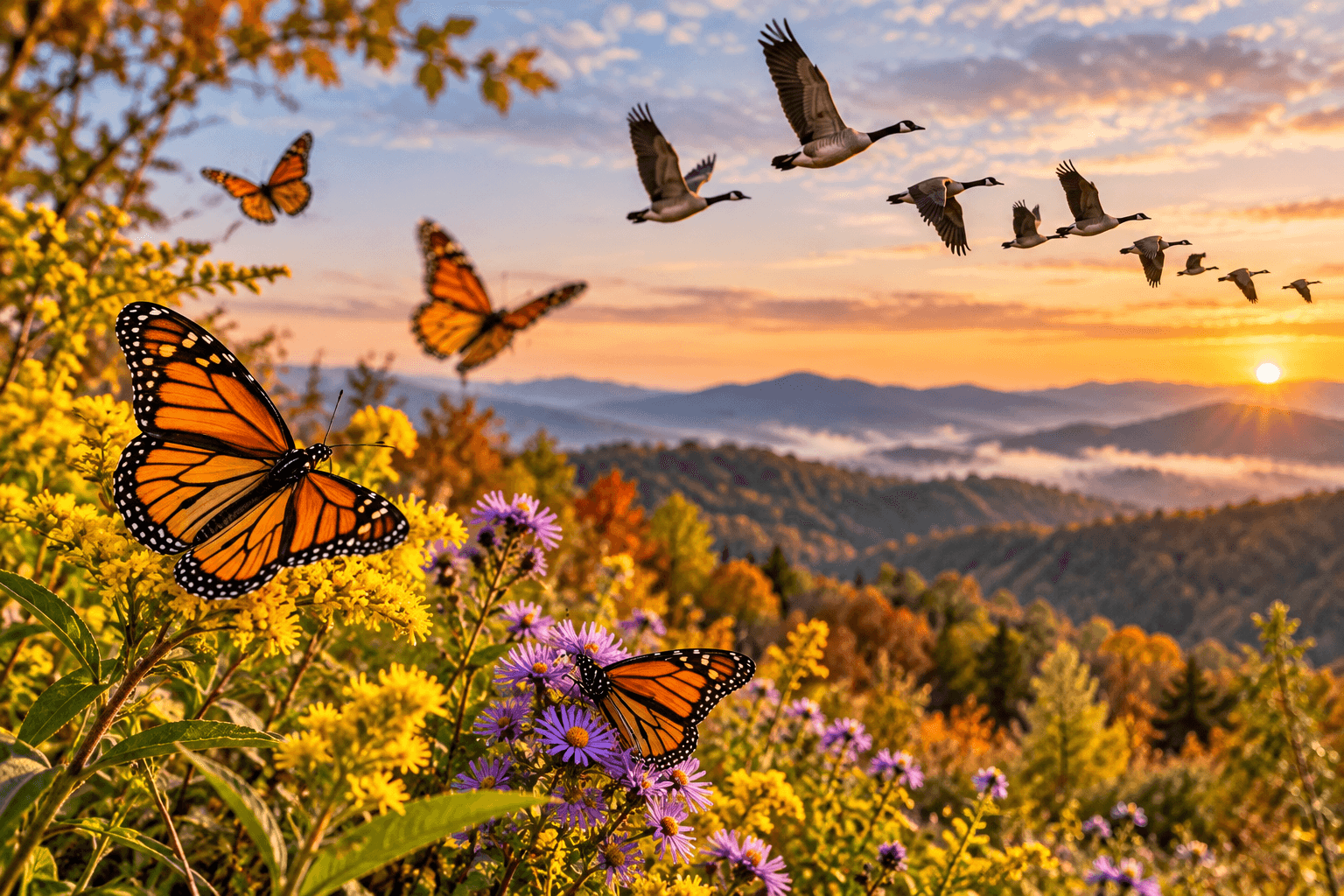
A Season of Travelers
Fall in East Tennessee is not only about colorful leaves.
It is also a season of movement, as birds and butterflies travel through the region toward winter habitats.
Some migrants are easy to recognize, while others pass quietly through woodlands or travel overhead at night.
Open meadows, river corridors and protected forest habitats provide places to feed, rest and continue the journey.
The timing varies by species and weather, so the season unfolds in waves rather than in one dramatic weekend.
Monarch Butterflies on the Move
Among the most recognizable fall travelers are monarch butterflies, which can migrate extraordinary distances from summer breeding grounds toward wintering areas in central Mexico.
The National Park Service reports that monarchs typically move through the Smokies from mid-September to late October.
Open places such as Cades Cove, Cataloochee and Oconaluftee can provide good opportunities to watch for them when flowering plants and favorable weather coincide.
Watch sunny patches of wildflowers for orange-and-black butterflies stopping to feed.
Not every butterfly seen in October is necessarily a monarch, so observe wing patterns carefully rather than relying on color alone.
Avoid catching or handling butterflies simply to obtain a photograph.
Hawks Riding the Ridges
Broad-winged hawks are another striking autumn migrant.
These birds travel south along eastern ridgelines and may gather in rising columns of warm air before gliding onward.
In East Tennessee, their migration generally peaks earlier in fall, so an October 22 reader should not expect the same volume as in September.
A high-elevation overlook can still inspire curiosity about migrating raptors and the geographic routes they follow.
Bring binoculars if you have them, and watch from safe established overlooks instead of roadside shoulders.
The Songbirds You Might Miss
Warblers, tanagers, vireos and thrushes also pass through East Tennessee during their seasonal journeys.
Some species feed quietly among branches and understory, while others move at night and stop to rest the following day.
As the autumn progresses, birds that spend winter in Tennessee begin arriving from farther north.
White-throated sparrows and hermit thrushes are examples of species that can make local fall birdwatching rewarding.
Because many birds are less colorful or vocal than during spring breeding season, patient observation is especially useful.
Even a backyard tree or neighborhood greenway can become a resting place for a traveler.
Why Local Habitat Matters
Long-distance migration requires energy.
Butterflies and birds need safe places to pause, find food and recover before continuing.
Native flowering plants can support nectar-feeding insects, while shrubs, trees and healthy waterways create important shelter and feeding opportunities.
Large protected spaces such as Great Smoky Mountains National Park help preserve a variety of habitats across elevations.
Smaller natural areas, yards and community landscapes can also contribute when managed with wildlife in mind.
Simple choices like reducing unnecessary nighttime lighting, keeping cats safely indoors and avoiding pesticides where possible may help wildlife.
An Easy Way to Observe
You do not have to undertake a long hike to appreciate migration.
Try a morning walk near native flowers, pause beside a meadow or watch a wooded edge from a permitted public trail.
Binoculars and a field guide can help, but curiosity and patience matter just as much.
Record the date, place and species you notice, particularly if you participate in a recognized community-science program.
Never enter closed areas, approach nesting or resting wildlife, or block roads to pursue a sighting.
A quiet observation can be meaningful without becoming an expedition.
More Than a Passing Show
The monarch that pauses on a flower and the songbird resting in a tree connect East Tennessee to places hundreds or thousands of miles away.
Their journeys remind us that local habitats are part of a much larger natural network.
Autumn is an opportunity to notice those connections and to care for the places that help wildlife continue moving.
The next time you step outside in October, take a moment to look beyond the changing leaves: the season's travelers may be passing through. |
0 Comments
Join the conversation
Be the first to comment
Share your thoughts above.