

Emergency Documents Checklist for East Tennessee Households |
A manageable way to organize identification, medical details, insurance records and family contacts |
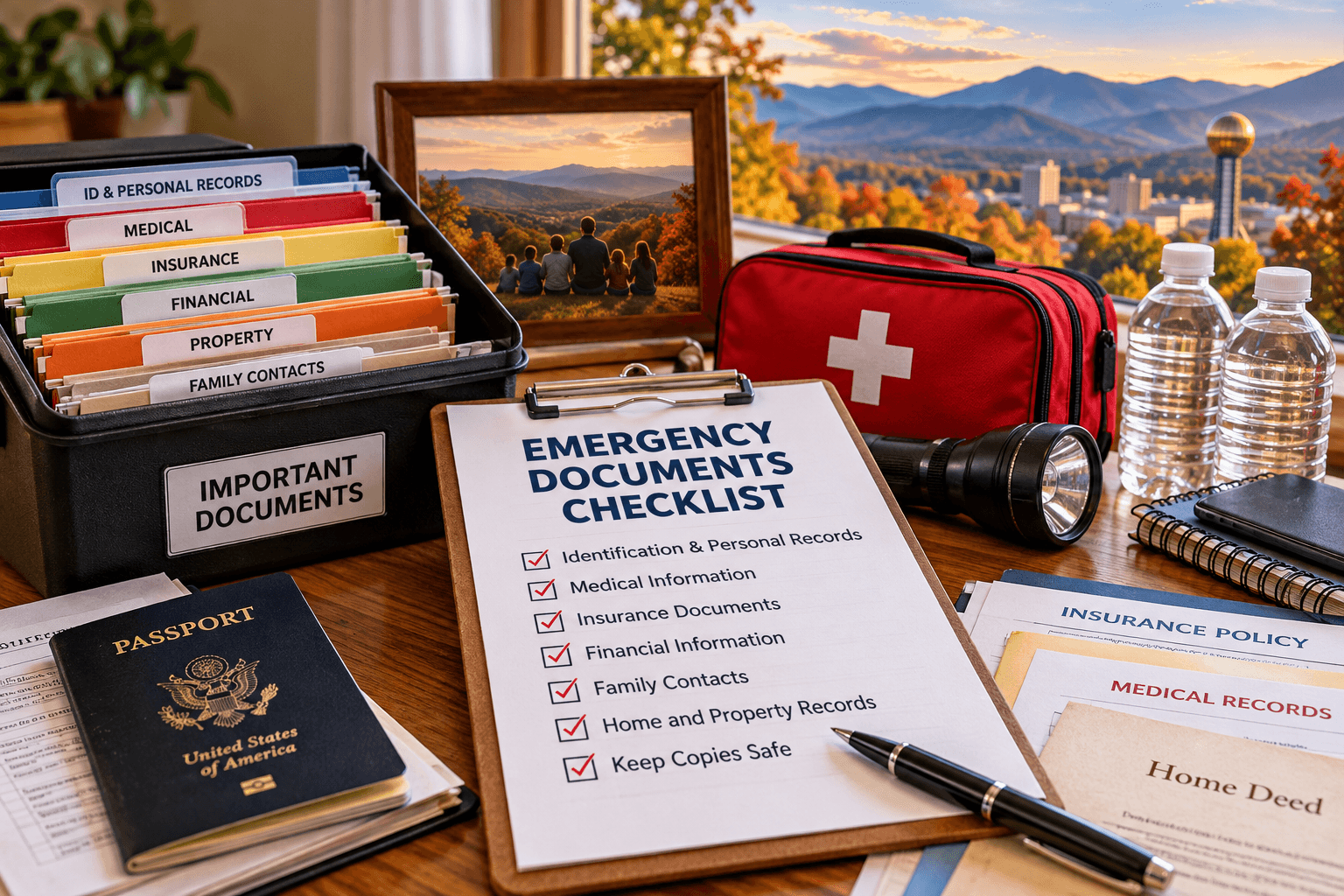
When a storm knocks out power or a family emergency requires a quick departure, searching for paperwork is one worry nobody needs.
An emergency documents checklist gives East Tennessee households a straightforward way to keep essential information organized and accessible.
That preparation matters to older adults, caregivers and anyone helping a family member manage appointments, insurance or household responsibilities.
Begin with identification and household records.
Gather copies of identification, important contact information, and documents showing ownership or occupancy of your home.
Keep a list of insurance companies, policy numbers and the phone numbers needed to report a claim.
Include vehicle insurance information and a basic household inventory that could help document losses after a damaging event.
Photographs of valuable belongings can be useful, but store them securely rather than leaving sensitive records on a shared device.
Make medical information easy to find.
Prepare a current medication list with dosages, allergies, medical conditions and the names of healthcare professionals.
Include copies of health insurance cards and relevant instructions for medical devices or equipment that require electricity.
If a family member relies on hearing aids, mobility equipment or other essential supplies, add a reminder about batteries and backup needs.
Review the list after any significant change in treatment, prescriptions or contact details.
Create a practical family contact sheet.
Write down emergency contacts, nearby relatives, trusted neighbors and an out-of-area person family members can reach if local communication is disrupted.
Add phone numbers for utilities, insurance, financial institutions and other essential services.
Do not rely entirely on a phone that could be lost, damaged or discharged.
A printed copy in a safe place gives you another way to find those numbers.
Protect private information.
Keep paper copies in a water-resistant portable pouch for emergency use, with originals stored in a secure fire- and water-resistant location where appropriate.
Protect electronic copies with strong access controls and encryption, especially when they contain account or identification information.
Only share access with someone you trust who may need to help during an emergency.
A simple inventory of where originals are stored can be useful without carrying every sensitive document in an evacuation bag.
Make the folder part of a broader preparedness plan.
Review medications, transportation options, basic supplies, and how you will communicate if internet or cellular service is interrupted.
Choose a consistent place for the emergency folder and tell the appropriate family member where it is.
Set a reminder to revisit the contents twice a year and whenever insurance, health or household circumstances change.
Preparedness is not about expecting the worst.
It is about making a difficult day easier to manage.
Set aside half an hour this week to assemble the first version of your emergency documents folder. |
0 Comments
Join the conversation
Be the first to comment
Share your thoughts above.