How to Spot Fall and Holiday Scams |
Medicare calls, fake charities, package texts, phishing messages and questionable contractors can become harder to recognize during a busy season. A few simple habits can help protect your money and personal information. |
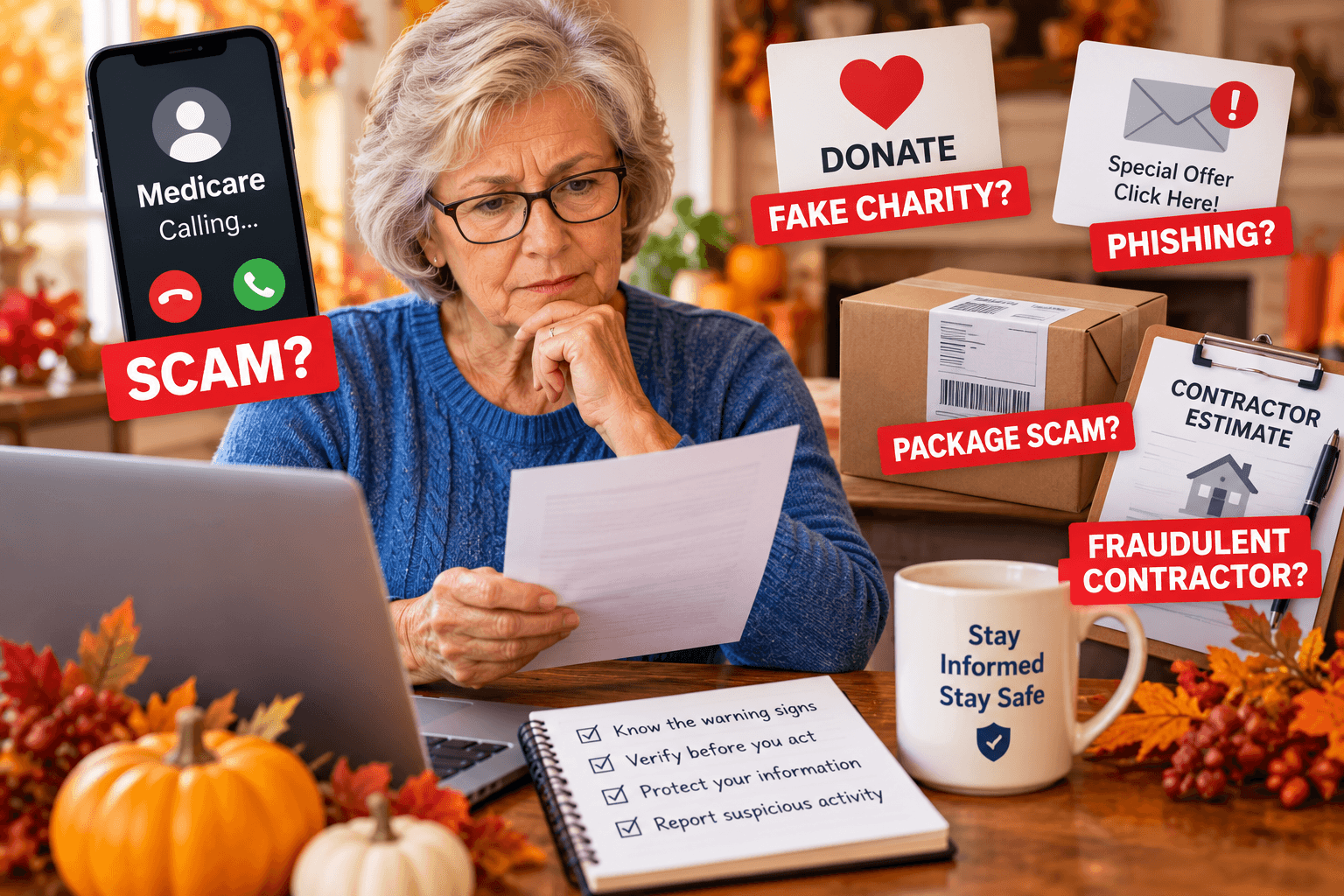
Fall brings plenty of legitimate activity to our phones, mailboxes and inboxes.
Medicare Open Enrollment approaches. Charities begin year-end fundraising. Holiday shopping picks up. Packages start arriving more frequently. Homeowners schedule repairs before winter.
Unfortunately, those same activities give scammers believable reasons to contact you.
The Federal Trade Commission and Tennessee consumer-protection officials repeatedly warn that scammers succeed by impersonating organizations people already recognize and creating pressure to act quickly. That makes one rule especially valuable:
Slow down before you respond.
A legitimate organization can usually give you time to verify who is contacting you.
Be Careful With Unexpected Medicare Calls
Medicare Open Enrollment begins October 15, and the increased advertising surrounding the season can make an unexpected Medicare-related call seem legitimate.
Someone representing a Medicare health or drug plan generally cannot call you unless you are already a member of that plan or you have given permission to be contacted. Medicare also advises beneficiaries not to share their Medicare number or other personal information with someone who unexpectedly contacts them by phone, email or in person.
Be particularly suspicious if someone calls claiming your Medicare benefits will be canceled unless you provide information immediately.
Don't use a phone number supplied by a suspicious caller. Hang up and contact Medicare directly at 1-800-MEDICARE (1-800-633-4227) if you need to verify something about your coverage.
That Package Text May Not Be About a Package
Holiday deliveries create another opportunity for scammers. A text may claim that a package could not be delivered because your address is incomplete. Another might say you missed a delivery and need to reschedule it.
Then comes the link.
The FTC warns that fake package-delivery messages are designed to get people to click links that lead to fraudulent websites, where scammers may try to collect passwords, financial information or other personal data. Fake package-delivery notices were the most
Instead of clicking the link, open the retailer's app or website yourself and check the order. You can also contact the shipping company through contact information you independently know is legitimate.
Research Before Giving to a Charity
The holiday season is also a major charitable-giving season, and fraudulent solicitations can look surprisingly convincing.
The Tennessee Attorney General's Office warns that scammers may imitate the names, websites, phone numbers and materials of legitimate charities. They may also pressure people to donate immediately or request payment in cash, wire transfers or gift cards.
Don't let urgency make the decision for you.
Ask for the organization's full name. Look it up independently. Tennessee charities soliciting donations generally must be registered with the Tennessee Secretary of State, providing another way to check an unfamiliar organization.
And don't assume a request is genuine simply because it mentions veterans, police officers, firefighters, children or disaster victims. Those emotional appeals are precisely why they can be effective.
Watch for Phishing That Looks Familiar
Phishing messages aren't always filled with spelling mistakes and obvious warning signs.
They may appear to come from a bank, retailer, government agency, delivery service or other organization you know. The message may claim there is suspicious activity on your account, a payment problem or something requiring immediate attention.
The safest response is often not to respond at all.
Rather than clicking a link or calling the number in the message, contact the organization independently through its official website, app, statement or a phone number you already trust.
That simple separation between the message you received and the contact method you use to verify it can stop many scams.
Be Wary of the Contractor Who Appears at Your Door
Autumn is also home-repair season. Roof work, gutters, tree trimming, heating systems and other preparations for winter can bring legitimate contractors into neighborhoods.
They can also attract fraudulent operators.
Tennessee consumer officials advise homeowners to be cautious of contractors who use high-pressure tactics, demand cash, won't provide written estimates or cannot demonstrate proper licensing when licensing is required. Consumers can check Tennessee professional licenses through the state's license-verification system.
Before agreeing to substantial work, know who you're hiring, get the agreement in writing and understand exactly what work will be performed and what you will pay.
A contractor insisting that you must decide right now deserves additional scrutiny.
Five Warning Signs Worth Remembering
Different scams use different stories, but many rely on the same tactics:
One warning sign doesn't automatically prove something is fraudulent. But it is a good reason to stop and verify before proceeding.
When Something Doesn't Feel Right
You don't have to determine whether a suspicious caller, email or text is fraudulent while you're still interacting with the person who sent it.
Hang up. Close the message. Don't click the link.
Then independently contact the organization supposedly trying to reach you.
The Tennessee Attorney General's Division of Consumer Affairs maintains information about common scams affecting Tennesseans, including health care, home repair, charity, phishing, gift card and grandparent scams.
Fall and the holidays should be a season for family, community and generosity, not anxiety about every phone call or text.
You don't have to become an expert at identifying every new scam. Develop one habit instead:
When someone unexpectedly asks for money, personal information or immediate action, stop and verify before you act. |
0 Comments
Join the conversation
Be the first to comment
Share your thoughts above.