

Fall Prevention at Home: A Guide for East Tennessee Seniors |
Simple changes to lighting, walkways, bathrooms and everyday routines can reduce household hazards |
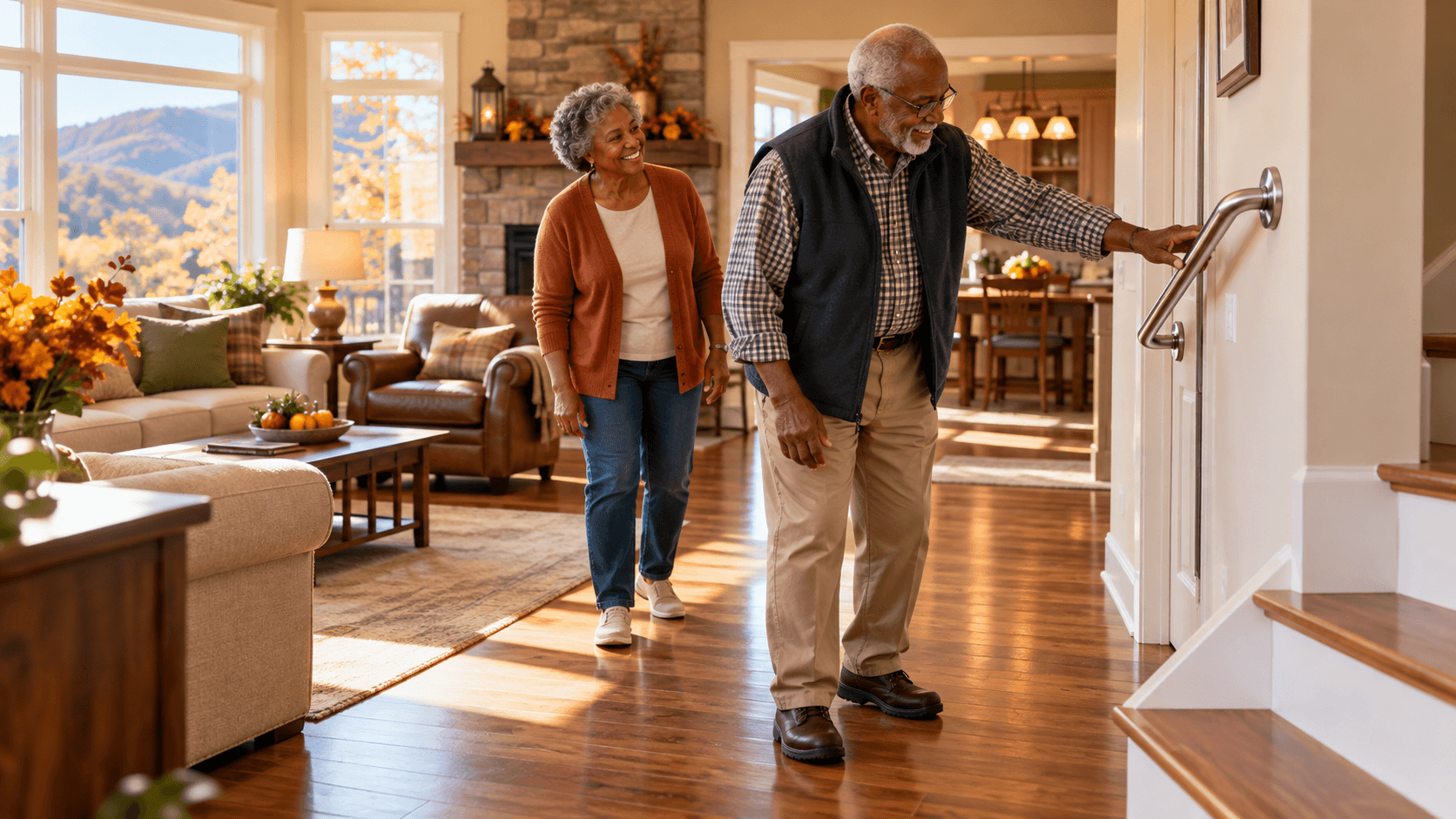
An ordinary trip to the kitchen or front porch can become risky when loose rugs, poor lighting or clutter turn familiar spaces into obstacles.
For older adults in Knoxville and across East Tennessee, fall prevention at home begins with noticing small hazards before they cause injuries.
Autumn adds its own challenges as daylight fades earlier, wet leaves collect on steps and outdoor surfaces become slippery after rain.
Start with the paths you use every day.
Walk from the bedroom to the bathroom, through the kitchen and out the main entrance, looking for loose cords, unstable mats and objects left in walking areas.
Move clutter out of those routes and secure or remove throw rugs that slide underfoot.
Make sure stairways are clear and have sturdy handrails, ideally on both sides.
Check that frequently used items are within comfortable reach, especially in kitchens and closets.
Standing on a chair to reach a high shelf creates an avoidable hazard, so ask for help when something is difficult to reach.
Lighting deserves a second look.
Add bright bulbs where shadows obscure thresholds, stairs or changes in flooring.
Night-lights or motion-activated lights can make nighttime trips to the bathroom easier to navigate.
Keep a working flashlight accessible in case a storm interrupts electricity.
Bathrooms need special attention.
Water, smooth surfaces and awkward movements can combine to make showers and tubs particularly challenging.
Properly installed grab bars near the toilet and bathing area offer more dependable support than towel racks.
Consider slip-resistant bathing surfaces and keep soap, towels and personal items within easy reach.
Do not forget the outdoors.
Clear fallen leaves and debris from porches, steps and walkways, and address loose paving stones or uneven steps.
Before leaving home in the evening, check that exterior lights work and that the path to the car is clear.
Choose sturdy, well-fitting shoes with nonslip soles rather than loose slippers or footwear that does not support the foot.
Personal health matters, too.
Regular activities that build strength and balance may help reduce fall risk, and a healthcare professional can suggest appropriate options.
Vision changes, dizziness and medication side effects can also affect stability.
Ask your doctor or pharmacist to review medications if you feel lightheaded or unsteady, and keep up with recommended eye examinations.
Family members can help by walking through the home together and asking which everyday tasks feel less secure than they once did.
The goal is not to make a home feel restricted.
It is to make familiar routines safer and help older adults remain confident and independent.
This week, choose three practical improvements and make them before a small hazard becomes a serious problem. |
0 Comments
Join the conversation
Be the first to comment
Share your thoughts above.