

One Local Thing: The Mabry-Hazen House and Knoxville's Remarkable Past |
Civil War history, a notorious Gay Street gunfight and a family collection preserved across generations |
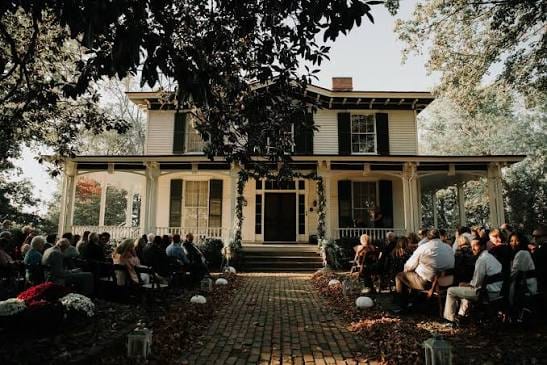
A Knoxville House With an Extraordinary Past
On a hill above downtown Knoxville stands a house that has watched the city change for more than 160 years.
The Mabry-Hazen House, completed in 1858 at 1711 Dandridge Avenue, looks like an elegant nineteenth-century residence, but its history is filled with business ambition, Civil War divisions, deadly conflict and personal controversy.
Three generations of one family lived here, and much of what they owned still remains inside.
That continuity gives visitors something unusual: a way to experience Knoxville history through the possessions and choices of people who actually occupied the rooms.
Joseph Mabry and the Making of Knoxville
The home was built for Joseph Alexander Mabry II, a prominent merchant, landowner and railroad investor.
Mabry and his brother-in-law William Swan helped establish the public marketplace that became Knoxville's Market Square in the 1850s.
He was involved in railroad development during a period when transportation connections were reshaping the region's economy.
His wealth and influence also rested partly on slavery: he was among Knoxville's largest enslavers before the Civil War.
That history is essential to understanding the house and the unequal society in which the family prospered.
The Italianate-style residence reflected both Mabry's position and the optimism of a growing railroad town.
A Civil War Landmark
East Tennessee was deeply divided during the Civil War, and the strategically situated hilltop property became part of that conflict.
Confederate forces used the house, and Union forces later occupied the site after taking control of Knoxville.
Its grounds were incorporated into the city's defenses, turning a family residence into part of the wartime landscape.
Today the museum uses the house to explain those divisions, including the experiences of enslaved people and the consequences of emancipation.
The story is more complicated than a mansion occupied by famous officers; it is also about the people whose labor sustained the household and whose lives changed during and after the war.
The Gunfight That Reached Mark Twain
One of the home's best-known stories unfolded not on the property but on Gay Street.
On October 19, 1882, Joseph Mabry, his son and banker Thomas O'Conner died in a violent confrontation in downtown Knoxville.
The extraordinary three-way shooting made national news and later appeared in Mark Twain's Life on the Mississippi.
The episode reflected a volatile mix of personal rivalries, business disagreements and a public culture in which armed confrontations could turn deadly.
For modern readers, it is startling to imagine such an event in the business district that now hosts cafés, restaurants and shops.
The house helps connect that shocking moment with the family whose lives were changed by it.
Evelyn Hazen and a Public Scandal
A later generation brought a different kind of controversy.
Evelyn Hazen, the last family member to live in the house, became involved in a much-publicized breach-of-promise case against former fiancé Ralph Scharringhaus.
The court proceedings in the early 1930s exposed intensely private matters to the public, illustrating the restrictive expectations placed on women of that era.
Accounts of the case describe how the publicity damaged Evelyn's place in Knoxville society, despite her legal success.
She continued living in the family home for decades afterward.
Her story is both sensational and revealing, offering a window into how reputations, gender and social expectations shaped everyday life.
A Museum Made Possible by an Unusual Will
When Evelyn died in 1987, she left instructions that the property and its contents be used as a museum, with an alternative that could have led to the house's destruction.
The Hazen Historical Museum Foundation was established in 1989, and the house opened to the public in 1992 after restoration.
Today the museum displays more than 2,500 original family artifacts, according to its current official description.
Furniture, decorative objects, documents and ordinary belongings help visitors see the changing tastes and routines of the people who lived there.
The collections span roughly 130 years, giving the house a layered character that a single-period reconstruction would struggle to reproduce.
The foundation also preserves nearby Bethel Cemetery, a Civil War-era burial ground associated with the site's wider history.
Visiting the Mabry-Hazen House
The museum is located at 1711 Dandridge Avenue, east of downtown Knoxville.
Guided tours generally operate on selected weekday hours, with Saturday tours by appointment.
The published visitor information lists admission at $10 for adults and free entry for children age 12 and younger, although readers should confirm prices and tour schedules before visiting.
Parking directions are important because the museum lists a separate parking-lot address at 1690 Rosedale Avenue.
Tours and occasional special programs offer ways to experience the rooms and learn the stories behind their contents.
This is a historic house with older architectural features, so visitors with mobility needs should contact the museum about access before arriving.
Why This One Local Thing Matters
Knoxville has many familiar landmarks, but the Mabry-Hazen House preserves something rarer than a beautiful building.
It holds generations of memories, contradictions and material evidence in a setting where the stories actually unfolded.
There is no need to romanticize the past to find it compelling.
The house invites visitors to consider ambition and exploitation, war and recovery, reputation and resilience, and the challenge of deciding what a city should remember.
Next time you pass through East Knoxville, remember that one hilltop house contains an unusually personal account of the city's history. |
0 Comments
Join the conversation
Be the first to comment
Share your thoughts above.