

Smokies Warn Visitors: Give Elk Plenty of Space During Fall Rut |
Bull elk are especially active and unpredictable this time of year, and park officials are reminding visitors to watch from a safe distance. |
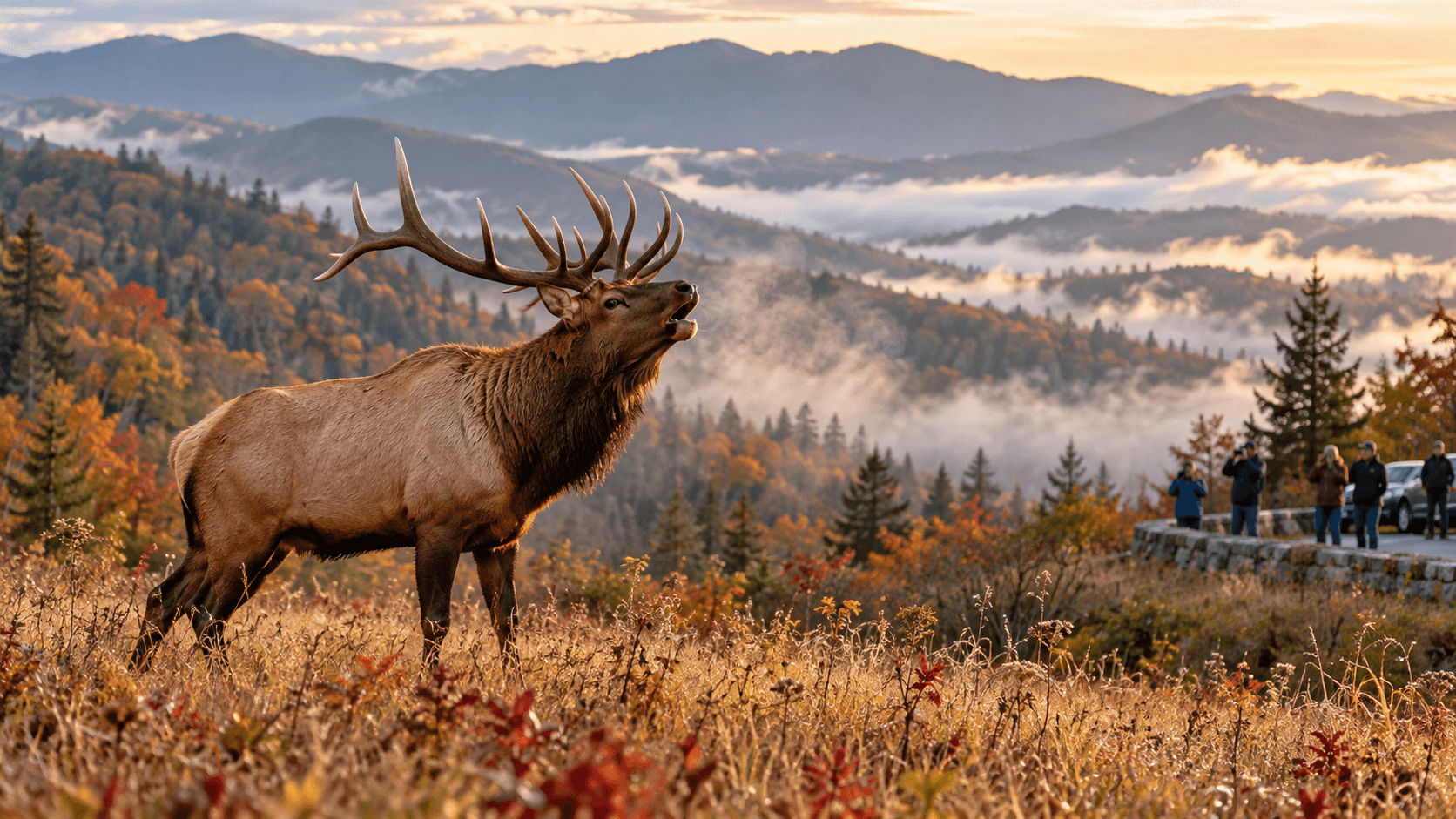
Fall is one of the best times to see elk in the Great Smoky Mountains, but it is also one of the most important times to keep your distance.
Great Smoky Mountains National Park is reminding visitors that elk are in the middle of their annual fall rut, the breeding season when bull elk become more territorial, more active and potentially more aggressive.
That means a peaceful wildlife sighting can turn dangerous quickly if people get too close.
Why elk are more unpredictable right now
During the rut, bull elk compete for mates and may challenge other bulls, chase cows and react aggressively to anything they see as a threat.
Visitors may hear bulls bugling, see them sparring with one another or notice them moving through open fields more frequently than at other times of year.
Those behaviors are impressive to watch, but they are also a reminder that elk are large, wild animals.
An adult bull can weigh several hundred pounds and can move much faster than many people expect.
Keep your distance
Park rules require visitors to stay at least 50 yards away from elk and other large wildlife.
A simple rule of thumb: if the animal changes its behavior because of your presence, you are too close.
That includes elk that stop feeding, turn toward you, begin moving away or show signs of agitation.
Visitors should never approach elk for a closer photo, attempt to feed them or block their path with a vehicle.
Be especially careful around roads
Some of the most popular elk-viewing areas in the Smokies are near roadways, which can create another hazard.
Drivers may slow suddenly or stop when elk appear, creating traffic backups and unsafe conditions.
If you see wildlife from the road, use designated pull-offs when available and avoid stopping in travel lanes.
Pedestrians should also be cautious when crossing roads or standing near shoulders while watching elk.
Where you are most likely to see elk
Elk sightings are especially common in the Cataloochee Valley and around Oconaluftee on the North Carolina side of the park.
Early morning and late afternoon are often the best viewing times, when elk are more active and lighting is better for photography. Because those areas can get busy during the rut, patience is important.
The best wildlife viewing experience is often the one where you give the animal plenty of room and let the scene unfold naturally.
What to do if an elk gets too close
If an elk begins moving toward you, do not wait to see what happens.
Back away calmly and give the animal a clear route to move through the area.
Do not run toward a vehicle or crowd around the animal with other people.
If you are photographing elk, use a telephoto lens or zoom instead of trying to close the distance.
The takeaway
Fall elk season is one of the Smokies’ most memorable wildlife experiences, especially when bulls are bugling across mountain valleys.
But the safest way to enjoy it is also the simplest:
Stay back, give elk room, and remember that a good wildlife encounter should never require getting close. |
0 Comments
Join the conversation
Be the first to comment
Share your thoughts above.