
Before the Parkway: When Pigeon Forge Was a Quiet Mountain Community |
Uncover the hidden history of Pigeon Forge before it became a bustling tourist destination - a fascinating journey back in time! |
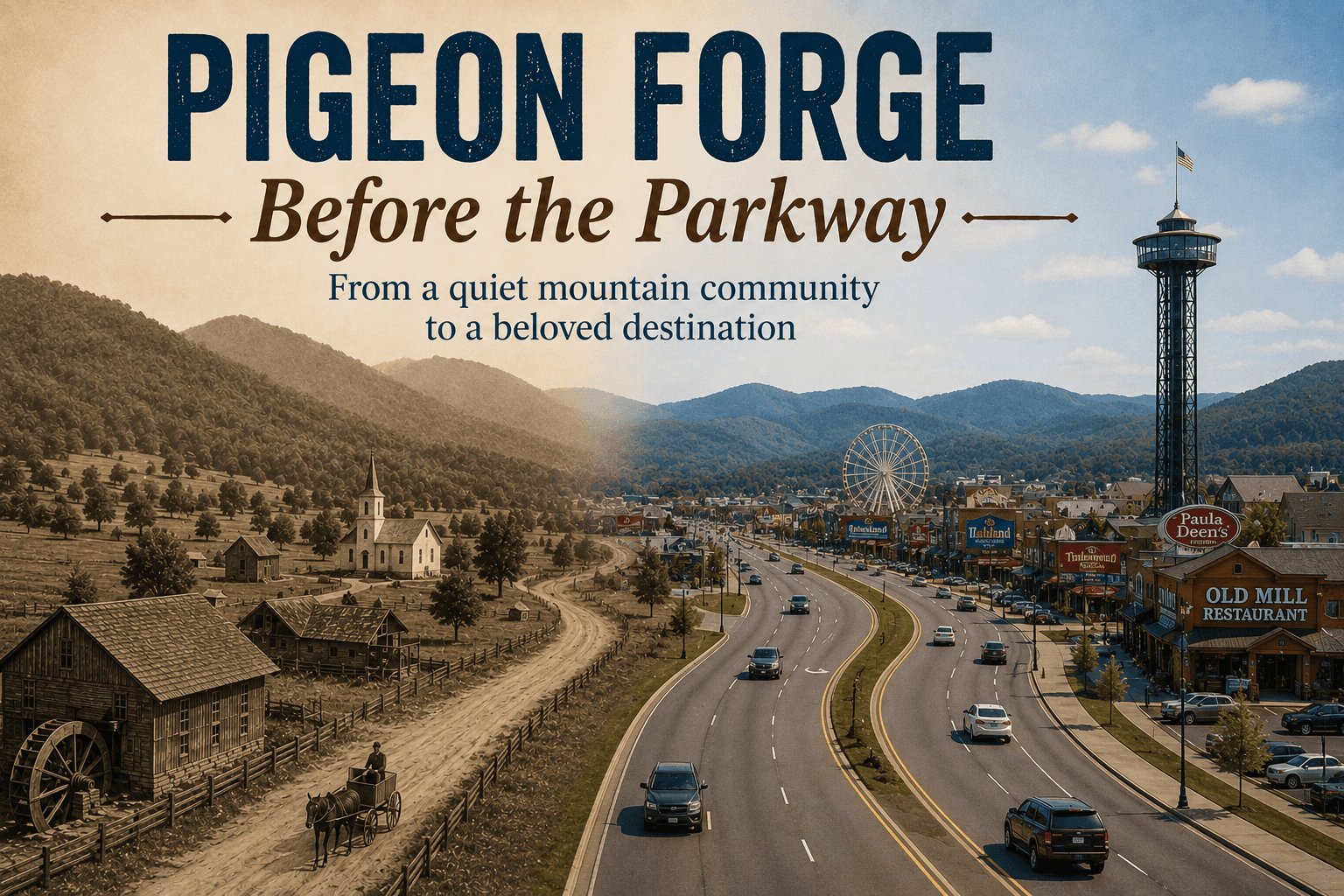
Today, millions of visitors travel through Pigeon Forge each year, drawn by family attractions, entertainment, and its gateway location to the Great Smoky Mountains National Park. But for much of its history, the town looked remarkably different.
In the early 1800s, families settled along the fertile banks of the Little Pigeon River, where rich farmland supported generations of Appalachian farmers. Corn, wheat, livestock, and gardens sustained local families, while churches, one-room schools, and small country stores became the heart of community life.
The town takes its name from an iron forge built in the 1820s by Isaac Love. The forge produced iron for nearby settlements, while the river was home to large flocks of passenger pigeons—a now-extinct bird that once darkened the skies during migration. Together, the forge and the pigeons gave the community the name that has endured for more than two centuries.
For decades, the road now known as the Parkway was little more than a rural highway connecting farms and mountain communities. Instead of theaters, attractions, and shopping centers, visitors would have found open fields, family homes, barns, and sweeping views of the surrounding mountains.
Everything began to change after the creation of the Great Smoky Mountains National Park in 1934. As tourism steadily increased, Pigeon Forge became a popular stop for travelers exploring the Smokies. New motels, restaurants, and roadside businesses appeared throughout the 1950s and 1960s, laying the foundation for the tourism economy that continues today.
The town's biggest transformation came in 1986 with the opening of Dollywood. The park brought national attention to Pigeon Forge and sparked decades of continued growth, turning the once-quiet farming community into one of the Southeast's most visited family destinations.
Despite that growth, reminders of old Pigeon Forge remain. Historic churches still welcome congregations, family cemeteries dot the hillsides, and a handful of century-old homes stand as quiet reminders of the community's agricultural roots. Along the Little Pigeon River, it's still possible to imagine a time when the sound of rushing water, horses, and blacksmith hammers filled the valley instead of traffic.
Understanding Pigeon Forge's past offers a deeper appreciation for what it has become. Beneath the bright lights, attractions, and bustling Parkway is a story of perseverance, mountain heritage, and generations of families who helped shape one of East Tennessee's most recognizable communities. |
0 Comments
Join the conversation
Be the first to comment
Share your thoughts above.