
The Lost Resort Town of Elkmont |
Uncover the mysterious history of Elkmont, the forgotten resort town hidden deep in the Great Smoky Mountains. |
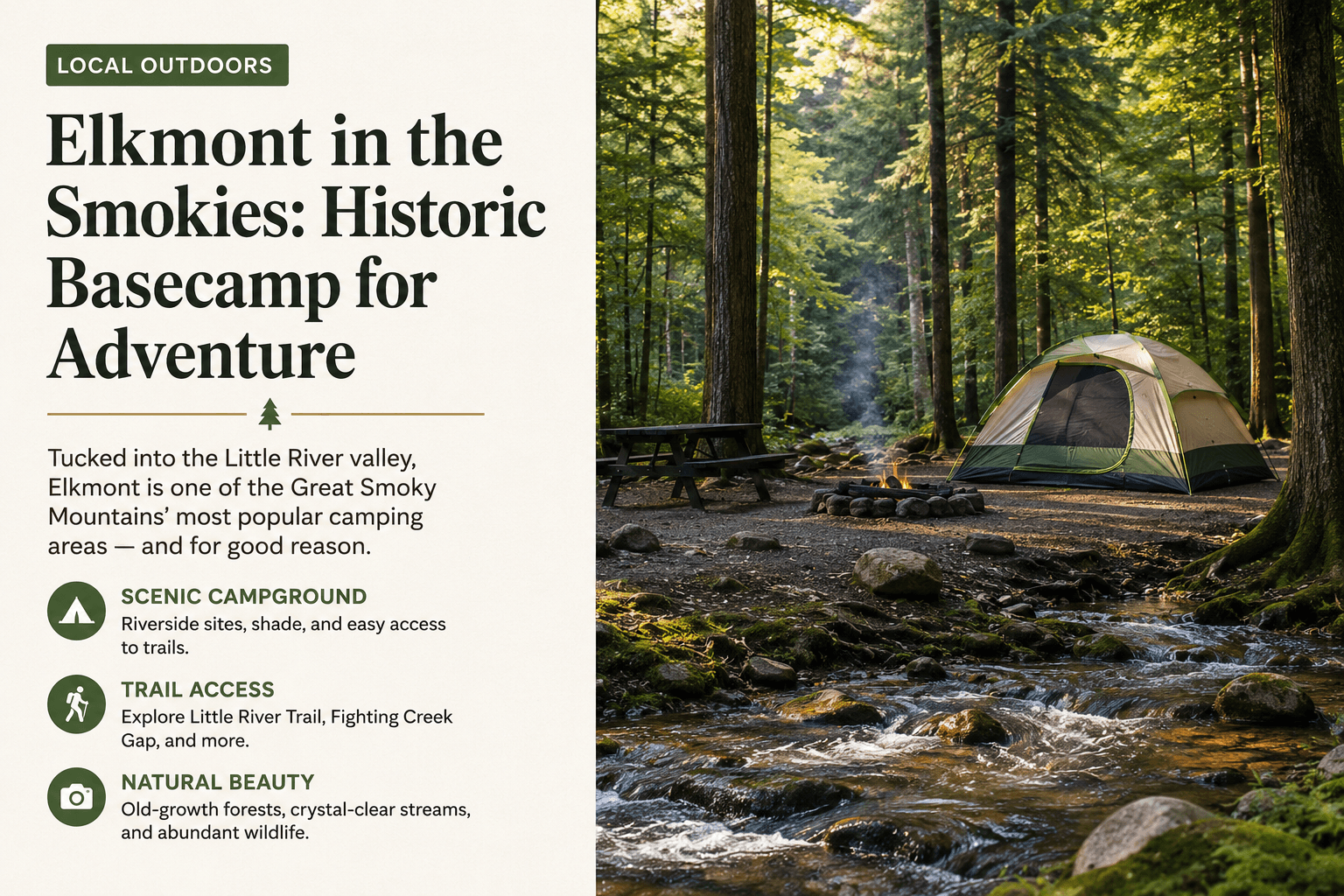
Before Elkmont became one of the most atmospheric places in Great Smoky Mountains National Park, it was a working town.
The National Park Service says that before Elkmont became the park’s largest campground, it was once the second-largest town in Sevier County. By 1918, more than 1,500 people lived there in a company town built by the Little River Lumber Company and Railroad, which established Elkmont in 1908 and owned nearly 80,000 acres of what is now park land.
That logging history is the first layer of Elkmont’s story. The Little River Railroad helped move timber through the mountains and gave workers, supplies, and visitors access to an area that had once been much harder to reach.
Then Elkmont became something else.
As logging opened the valley, the area also became a mountain retreat for people from Knoxville and beyond. Families and club members built vacation cottages along the river and in the woods. The Appalachian Club grew into a private summer community, while the nearby Wonderland Hotel helped make Elkmont a resort destination. Friends of the Smokies notes that the Appalachian Clubhouse and vacation cottages were built as Elkmont became a retreat, and that the Wonderland Park Hotel was constructed in 1912.
That is part of what makes Elkmont feel so unusual today. It was not only a logging camp, and it was not only a resort. It was both — a place where industrial mountain work and leisure-class summer life overlapped in the same narrow valley.
When Great Smoky Mountains National Park was created, the future of Elkmont changed again. Many private owners eventually left, leases expired, and the National Park Service faced a complicated question: should the buildings be removed so the forest could reclaim the land, or should some be preserved as part of the park’s human history?
The answer became a mix of both. Some structures were documented and removed, while a smaller number were preserved and restored, especially in the Appalachian Club’s Daisy Town area. The Elkmont Historic District is now one of the park’s most compelling reminders that the Smokies are not only wilderness — they are also full of human stories.
That is why people still call Elkmont a “ghost town,” even though the phrase does not tell the whole story. The feeling is real: quiet lanes, old porches, stone chimneys, restored cottages, empty spaces where buildings once stood, and forest pressing in from every side. But Elkmont is not just eerie. It is reflective.
It asks visitors to imagine the sound of trains, the smell of sawmills, children running between summer cottages, music at the clubhouse, families sitting by the river, and the slow transformation of private retreat into public park.
For East Tennesseans, Elkmont is one of the Smokies’ most fascinating local-history stops because it shows how quickly a place can change roles. A logging town became a resort. A resort became a park district. A park district became a place of memory.
The local takeaway: Elkmont is not simply abandoned. It is preserved in pieces — enough to let visitors feel what was there, while still watching the mountains take back the edges. |
0 Comments
Join the conversation
Be the first to comment
Share your thoughts above.