Big South Fork Is the Wilder Side of the 865 Region |
Uncover the untamed beauty and adventure of Big South Fork - the hidden gem of the 865 region! |
Great Smoky Mountains National Park gets most of the attention in East Tennessee, and for good reason. But north and west of Knoxville, another rugged landscape gives outdoor lovers a very different kind of adventure.
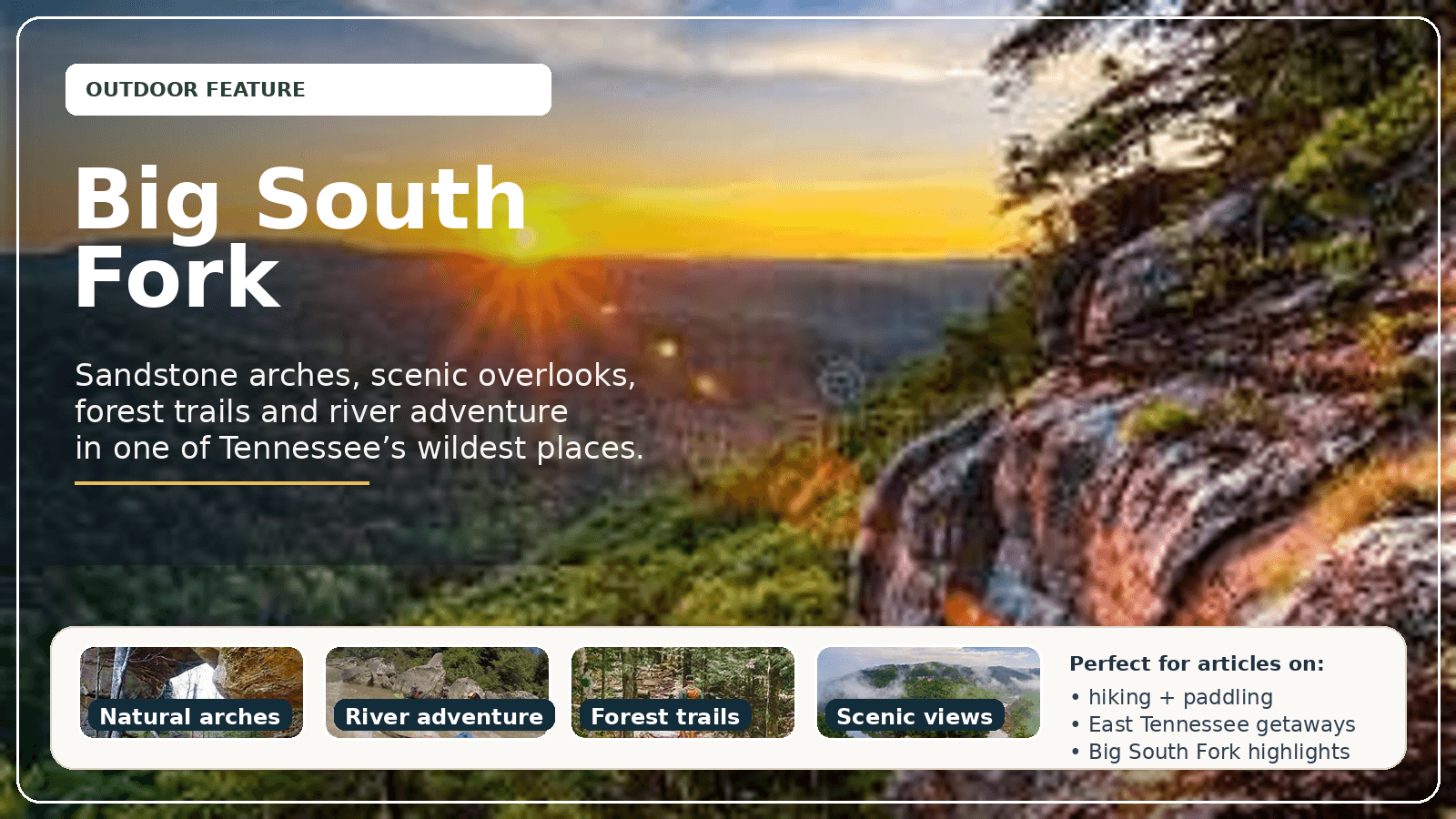
Big South Fork National River and Recreation Area stretches across the Tennessee-Kentucky line, protecting the Big South Fork of the Cumberland River and the dramatic Cumberland Plateau terrain around it. The National Park Service describes the area as a place for hiking, camping, backcountry camping, horseback riding, mountain biking, paddling, fishing, hunting, picnicking, and other outdoor activities.
For Knoxville-area readers, Big South Fork is a strong “next step” destination. It is farther than a quick city park walk, but close enough for a serious day trip or an easy weekend. And unlike the Smokies, where many visitors are chasing the same famous overlooks and waterfall trails, Big South Fork often feels quieter, rougher, and more spread out.
A Different Kind of Mountain LandscapeThe Smokies are known for high ridges, misty forests, wildflower trails, and historic coves. Big South Fork feels more like sandstone country: river gorges, rock shelters, cliffs, arches, overlooks, and forested plateau trails.
That difference is part of the appeal. Hikers can find natural arches, bluff views, creekside routes, and trails that feel remote without requiring a long drive across the state. Paddlers can explore sections of the Big South Fork of the Cumberland River, while campers can choose between developed campgrounds and backcountry options. The park also has a strong horseback-riding identity, with trails and campgrounds that draw riders from across the region.
Why It Belongs on an 865 Outdoors ListBig South Fork is especially useful for locals who already know the Smokies and want variety.
It works for hikers who want something more rugged than a greenway, families looking for a weekend camping base, mountain bikers who want a bigger trail system, paddlers looking for river time, and photographers chasing cliffs, arches, and fall color. Recreation.gov lists five campground options in the area, with activities ranging from biking and hiking to fishing, paddling, horse camping, swimming, and wildlife viewing.
It also gives East Tennesseans another way to spread out. The Smokies can be crowded during peak weekends, especially around Cades Cove, Newfound Gap, and the Gatlinburg side of the park. Big South Fork offers a different pace: fewer crowds, more elbow room, and a stronger backcountry feel.
Start with a Visitor Center and a Real PlanBig South Fork is not the place to wing it with a half-charged phone and vague directions. Trails can be long, signage varies by use, and cell service may be limited. The National Park Service recommends planning by activity, and the park includes options for hiking, paddling, camping, horseback riding, mountain biking, fishing, and backcountry use.
For first-timers, start with an official visitor center or a well-known trailhead, choose a realistic route, and check current park conditions before heading out. Bring water, layers, a paper map or downloaded offline map, and enough daylight to finish comfortably. Good Fits for Different Readers
For casual explorers: Look for shorter overlook hikes, picnic areas, and scenic stops that do not require a full backcountry commitment. For hikers: Big South Fork is known for rugged trails, arches, waterfalls, and gorge views. Choose trails by elevation, distance, and surface — not just mileage.
For paddlers: The river is a major part of the park’s identity, but water levels and conditions matter. Check official guidance and avoid assuming a route is beginner-friendly.
For campers: The area offers developed campgrounds as well as backcountry camping, with permits required for backcountry use.
For horseback riders and mountain bikers: Big South Fork is one of the region’s stronger multi-use outdoor destinations, with designated trails and facilities for different types of recreation.
The Local TakeawayBig South Fork is not a replacement for the Smokies. It is the perfect complement.
Where the Smokies feel lush, iconic, and heavily visited, Big South Fork feels rugged, spacious, and a little wilder. It rewards people who plan ahead and want to explore beyond the usual East Tennessee outdoor checklist.
For 865 readers, the message is simple: when you want a quieter, rockier, more backcountry-style adventure, point your weekend toward Big South Fork. |
0 Comments
Join the conversation
Be the first to comment
Share your thoughts above.